A Vedic wedding that means something to every generation in the room.
I conduct weddings in accordance with the timeless traditions of the Arya Samaj: more spiritual, less ritualistic, and designed together with you and your families.
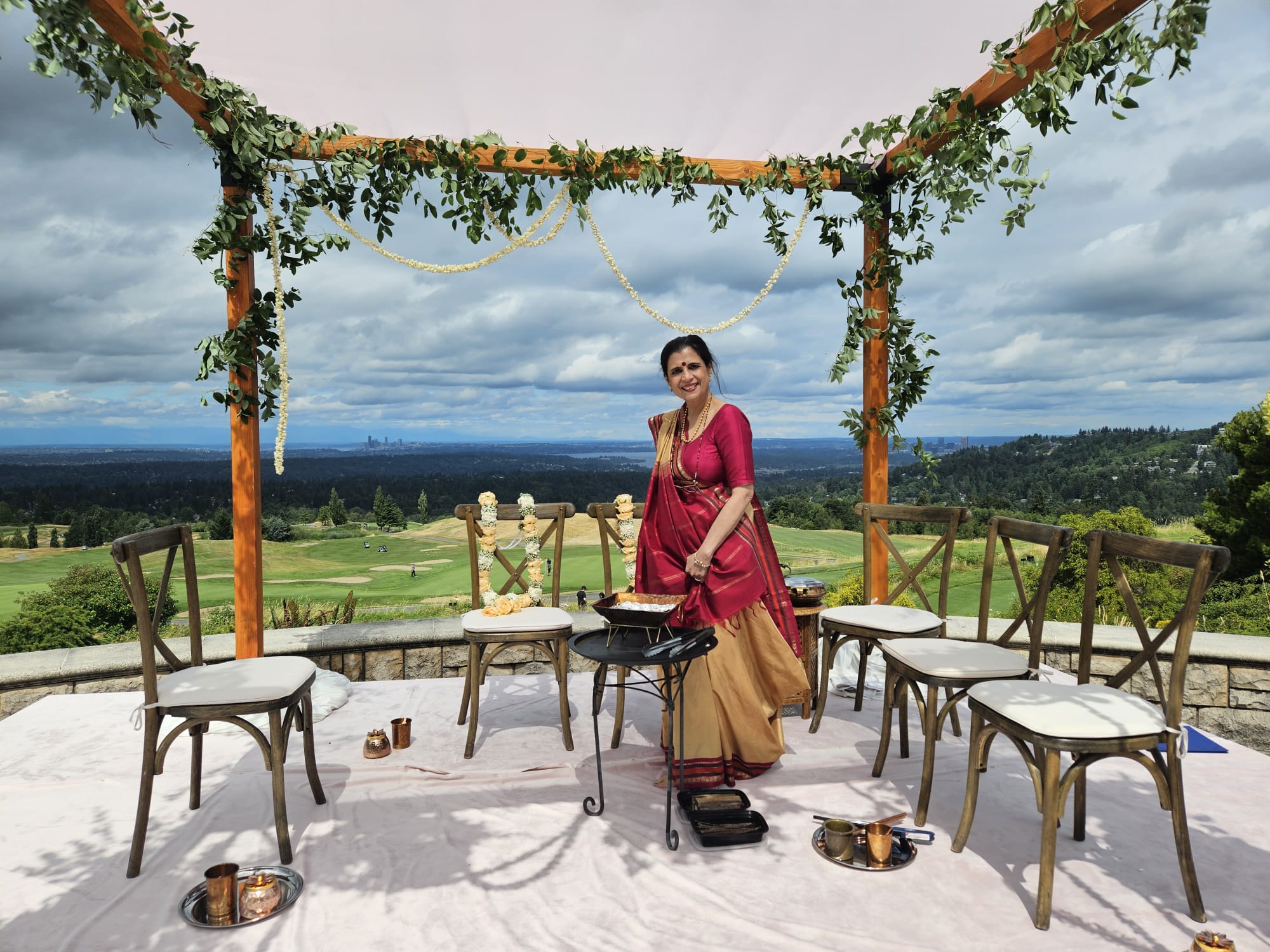
What to expect
For parents who want tradition, and children who want meaning.
Many families come to me with two generations in the room, each hoping for something slightly different. A good ceremony gives both of them what they came for.
For the parents
The sacred fire, the Vedic mantras and the seven steps are all here. Nothing is stripped away to make it modern, and nothing needs to be explained to you beforehand.
For the couple
You will understand every part of it. The ceremony is in English and Sanskrit, with translations, and the vows are mutual and equal, so they say what you actually mean to each other.
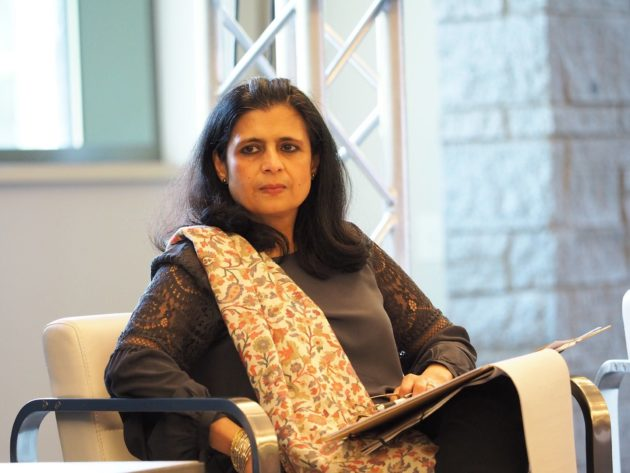
It started with a request from someone I love.
Someone very close to me asked me to officiate at their wedding. I took that responsibility seriously, and studied how a Vedic ceremony is conducted under the principles of the Arya Samaj, a tradition I already knew.
I wanted to shape a ceremony that is more spiritual, less ritualistic, more inclusive and more meaningful than many I had attended, and to do it in consultation with the couple and their families.
By profession I am a professor of economics at Seattle University’s Albers School of Business and Economics, where I have held the Bosanko Chair in International Economics and Finance. My PhD is from the University of Massachusetts Amherst, and my research on emerging economies, capital flows and the Indian economy has appeared in dozens of peer-reviewed journals.
For the ceremonies themselves, I trained under an Arya Samaj priest, and I am an ordained minister, certified by the Universal Life Church. I live in Seattle and am glad to travel for the right wedding.
What makes an Arya Samaj wedding different
The Arya Samaj is a reformist movement within Hinduism. It does not believe in caste distinctions, idol worship or superstition. Its weddings rest on Vedic rituals and chants, and they honour the sanctity of marriage rather than social status or material display.
Simple
A single sacred fire, a short sequence of mantras, and no spectacle.
Inclusive
No caste, no idols, and no requirement that either of you be Hindu or Indian.
Equal
Patriarchal rituals like Kanyadaan, the giving away of the bride, are minimised in favour of mutual vows of equal partnership.
The ceremony, step by step
About 35 to 40 minutes, in English and Sanskrit. Here is the full sequence, in five movements.
Invocation and purification
The ceremony opens with prayer and a moment of preparation for everyone present.
Lighting the sacred fire
The havan fire is kindled and the first offerings are made. It stays at the centre of the wedding.
Joining as partners
The couple join hands and are bound together in the rites that mark the start of the marriage.
Offerings and circling the fire
Offerings are made together, and the couple walk around the fire.
Seven steps and blessings
The couple take seven steps together, each one a promise, and the ceremony closes with blessings from elders and guests.
Make it yours
The core steps stay as they are. Around them, personal touches are welcome, such as a ring exchange or the tying of a mangalsutra. Both fit easily into an Arya Samaj ceremony.
From weddings I have officiated
[One line about these couples, with their permission: where the weddings were, and what made each one personal.]
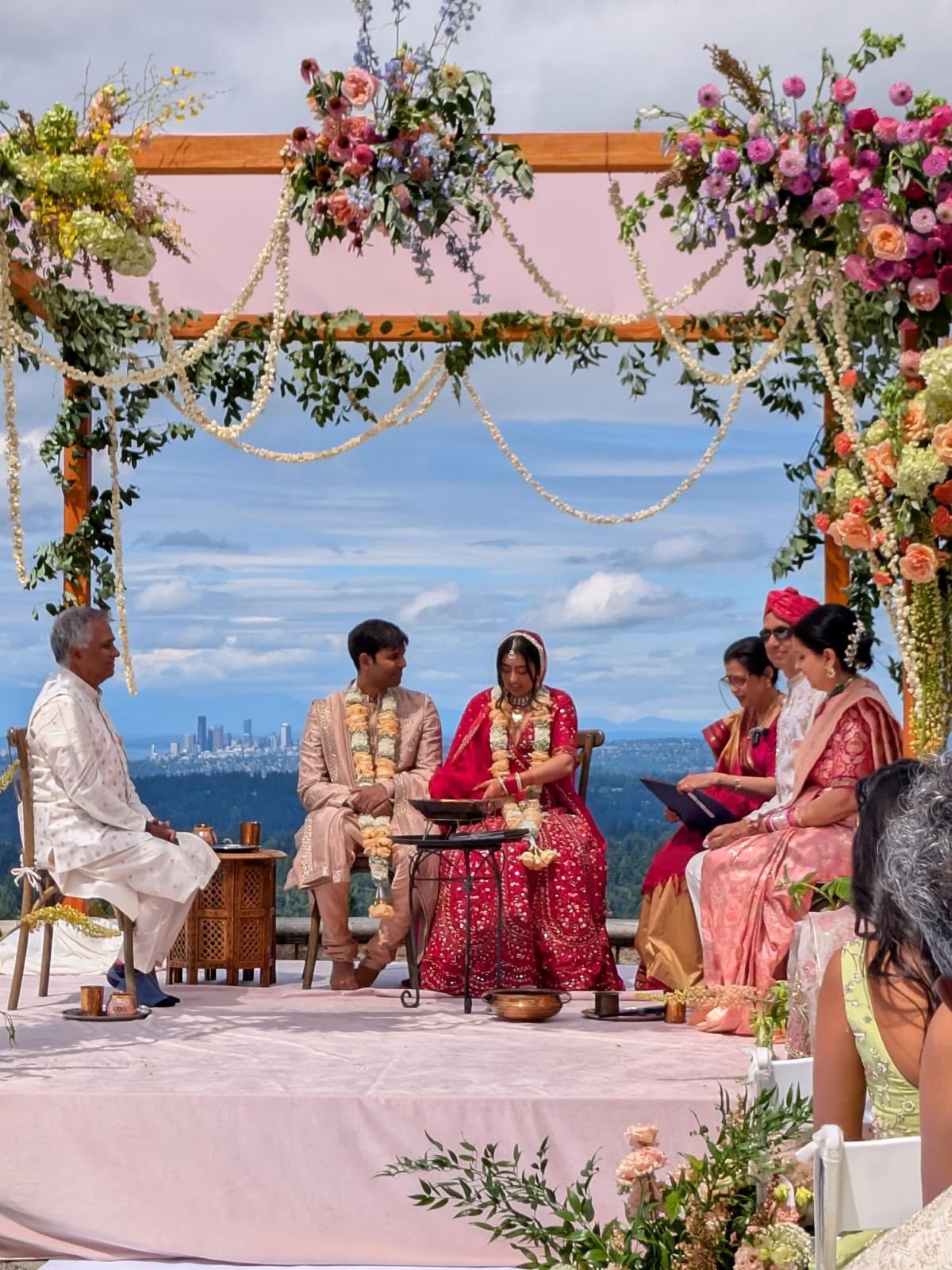
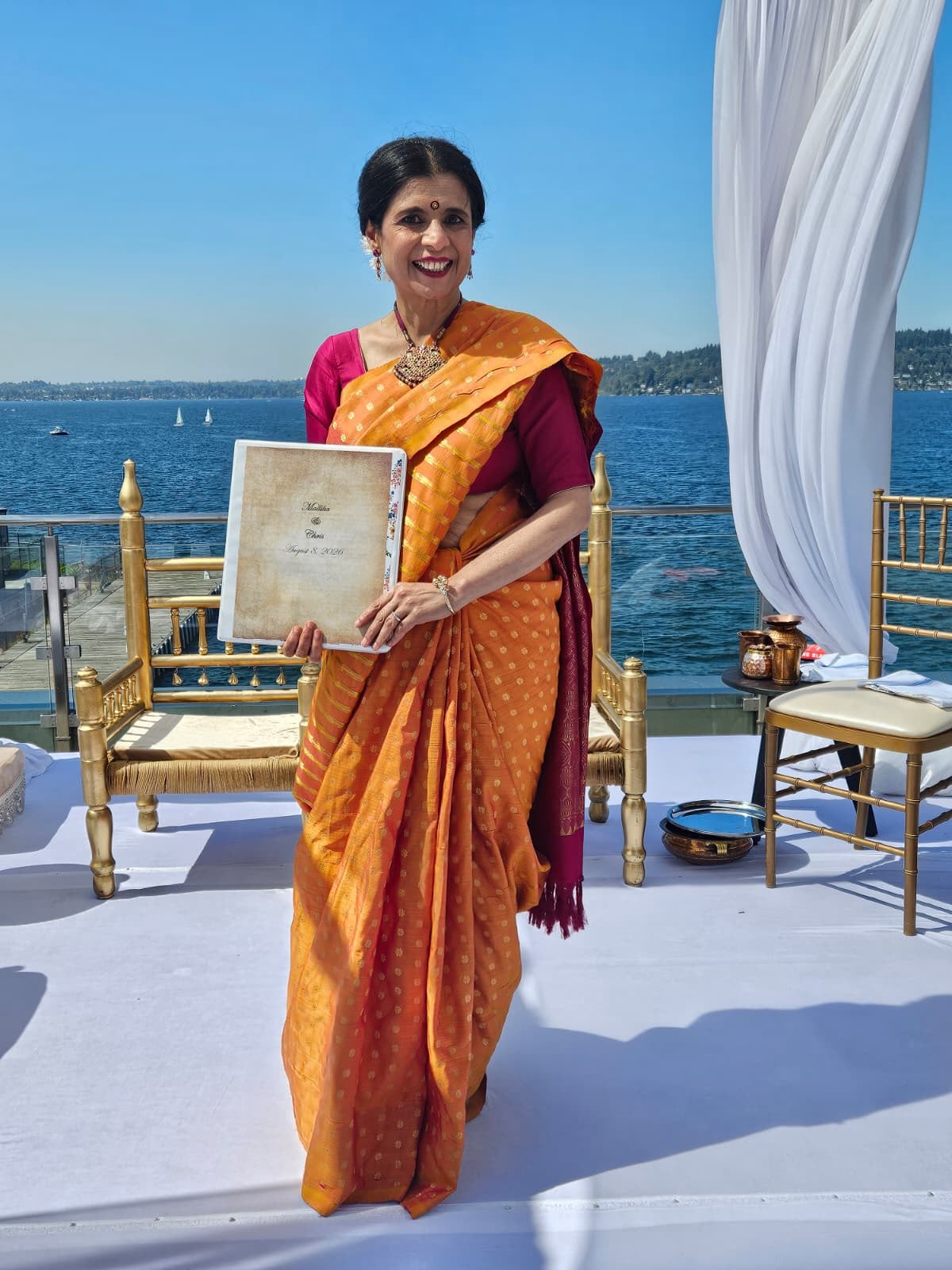
Kind words
We worried that a modern ceremony would feel hollow, and a traditional one would leave our daughter and her husband out of it. Meenakshi gave us both. Every mantra was explained, and the wedding felt like it truly belonged to the two of them.
I did not grow up with a Vedic wedding, and I was not sure what it would mean to me. Meenakshi walked us through the fire, the vows and the seven steps beforehand, and on the day I understood every word I was saying.
I came as a guest expecting to be lost. The translations we received ahead of time meant I could follow everything, and the ceremony was warm, short and genuinely moving.
What you receive
Every couple gets the materials they need so that guests can follow along and the ceremony runs smoothly.
There is no fee
I do not charge to officiate. Couples cover my incidentals, and for a wedding outside Seattle, my travel and the materials for the havan.
If you would like to give something in thanks, please make a donation to [CHARITY NAME] instead. [Add a line on what the charity does and how to give.]
Questions couples ask
Do we need to be Hindu or of Indian descent?
No. Anyone who wants a Vedic ceremony built on simplicity and equality is welcome.
Can one of us be of a different faith, or not Indian?
Yes. Many of the weddings I conduct are between people of different backgrounds.
Is the ceremony legally binding in Washington State, and do we need a separate legal signing?
Nothing extra is needed. Once you hold your Washington marriage license, I sign the marriage certificate right after the ceremony, along with you and two witnesses. For a wedding outside Washington, we will check that state’s rules together.
Can we customise the ceremony or skip rituals?
The core ritual steps stay. Beyond them, personal touches such as a ring exchange or a mangalsutra are welcome, and we will plan them together.
Do our parents need to approve of a non-traditional ceremony?
No. And there is nothing your parents or older relatives need to know beforehand; the ceremony is rooted in the Vedic tradition they will recognise.
Will our guests understand what is happening?
Yes. I provide English translations before the day, along with a program template, so guests can follow every step.
Beyond weddings: Griha Pravesh
Havan on Earth is about bringing the sacred fire to the moments that matter. Alongside weddings, I am glad to conduct a Griha Pravesh, the ceremony that blesses a new home with a havan.
The spirit is the same: simple, spiritual, and explained so that every guest can follow. [Confirm with Dr. Rishi: duration, fees or incidentals, and travel for a Griha Pravesh.]
Check availability
Send me your names, your wedding date and city, and a sense of your families. I will let you know if I am free, and we can talk through what you have in mind.